
Understanding Your Diagnosis
Receiving a prostate cancer diagnosis often comes with the challenge of learning new terms, the meaning of test results, and facing much uncertainty in the life of a patient and their family. Many patients feel overwhelmed by the information and unsure what it all means. Understanding your diagnosis is an important step toward feeling more confident and informed.
At the Prostate Cancer Center of Excellence, our role is to help patients interpret diagnostic information, understand imaging findings, and understand how all the pieces fit together so informed decisions can be made about treatment options. A PSMA PET/CT is one of the most valuable tools for a person recently diagnosed with prostate cancer or experiencing specific symptoms.
Who is a Candidate for PSMA?
- Patients with a rising PSA
- Patients with recurring prostate cancer
- Patients with metastatic prostate cancer
- Patients seeking cancer treatment needs
Disease Site
The disease site describes where prostate cancer is located in the body.
In some cases, cancer is found only within the prostate. In other cases, it may be detected in nearby tissue or other areas. Understanding the disease site is essential because it helps guide monitoring, imaging, and treatment planning.
Advanced imaging plays a key role in identifying disease location. Tools such as PSMA PET/CT and MRI can provide detailed views of where cancer is present, often without invasive procedures. These scans allow doctors to see areas of concern that may not be apparent through blood tests alone or other imaging modalities.
Knowing the disease site helps answer important questions that help a doctor know how to treat your cancer:
- Is cancer limited to the prostate?
- Are there signs it may be outside the prostate?
- How should care be planned moving forward?
This information provides clarity and clear direction for treatment planning.
Localized vs. Metastatic
One of the most important distinctions in a prostate cancer diagnosis is whether the disease is localized or metastatic.
Localized Prostate Cancer: the cancer appears to be contained within the prostate.
- Many localized prostate cancers grow slowly and may not require immediate treatment. In these cases, careful monitoring, imaging, and regular evaluation may be appropriate and discussed with the patient.
- Advanced imaging can help confirm whether cancer truly appears confined, providing reassurance and supporting thoughtful decision-making.
Metastatic Prostate Cancer: the cancer has spread beyond the prostate to other parts of the body, such as lymph nodes or bones.
- Advanced imaging (particularly PSMA PET/CT) is highly valuable in identifying metastatic disease. This imaging can detect small areas of spread that may not be visible with older imaging methods.
- Understanding whether disease is localized or metastatic helps guide treatment planning, monitoring strategies, and care coordination with specialists.
Staging and Grading
Staging and grading describe how advanced the cancer is and how it may behave over time. These factors help guide decisions on treatment, but are not predictions of outcomes.
Prostate Cancer Staging refers to how far cancer has progressed.
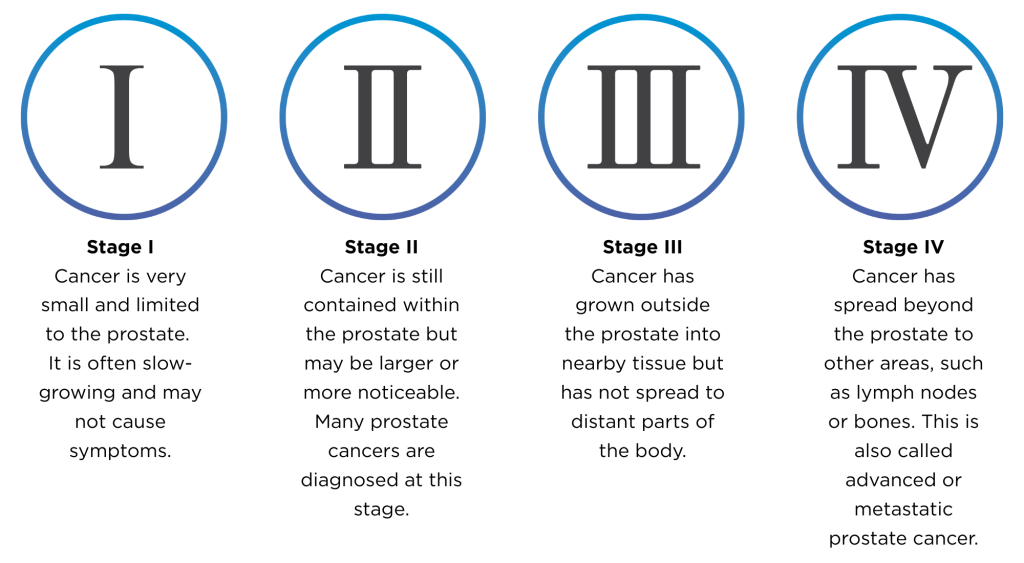
Once again, advanced imaging plays a significant role in staging by providing detailed information about precise disease location without invasive testing.
Prostate Cancer Grading uses the Gleason Score grading system to learn more about a prostate cancer diagnosis.
The Gleason Score is a grading system determined by a pathologist looking at tissue from a prostate biopsy under a microscope. The pathologist is able to assess how aggressive the cancer is likely to be by adding the two most common cell patterns (grades 1-5) together to arrive at a sum, which becomes the Gleason Score. The cell patterns are found in the tissue sample. A score from 6 (slow-growing) to 10 (aggressive) helps doctors plan treatment with lower scores suggesting slower growth and higher scores indicating faster growth and higher risk of spread.
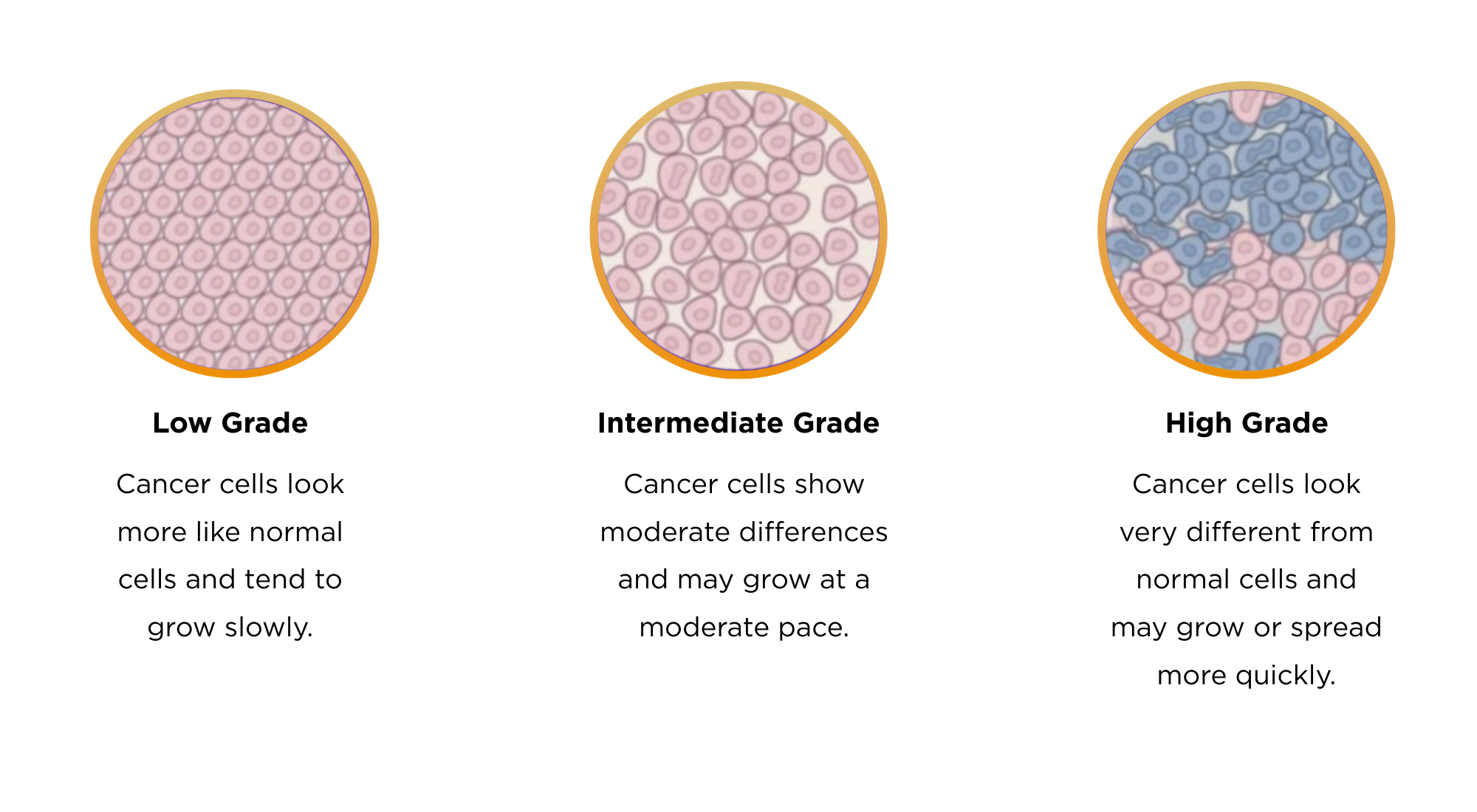
Grading helps provide context to the overall prostate cancer diagnosis, but it is only one part of the overall picture.